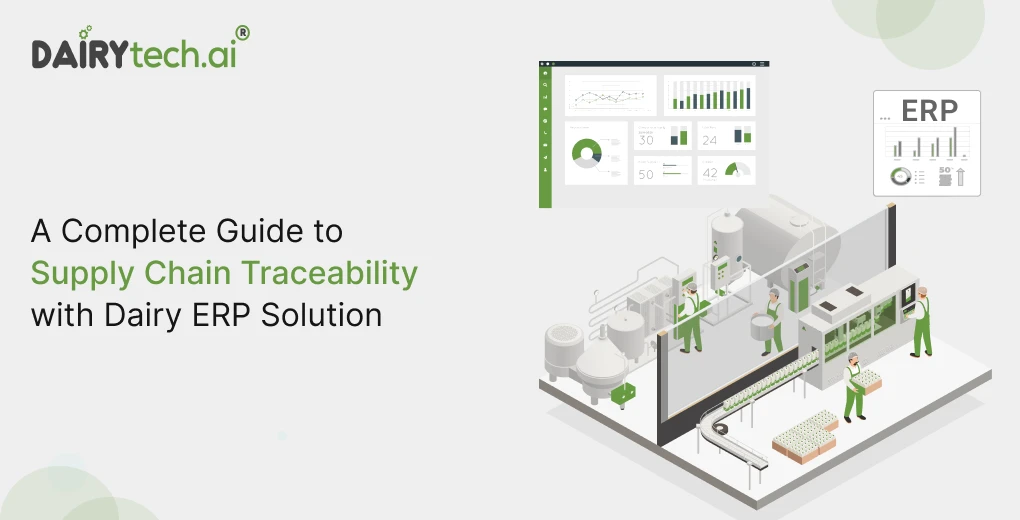
A Complete Guide to Supply Chain Traceability With Dairy ERP Solution
When a quality issue arises, can you, as a business, quickly identify the farm, batch, processing line, and distribution route involved? If your answer is no, your dairy supply chain is exposed to risks. If you can identify the problem, you can’t solve it.
The dairy market is highly regulatory-driven and transparency-focused, making supply chain traceability essential for businesses. Manual tracking and disconnected systems can no longer support food safety, compliance, or operational efficiency.
A dairy ERP solution enables end-to-end traceability. It centralizes data, automates compliance, and provides real-time visibility throughout the supply chain, from milk collection to final distribution.
The blog examines how a dairy supply chain can be made transparent, compliant, and resilient with the aid of an ERP system.
Supply chain traceability in the dairy business
Supply chain traceability in the dairy business refers to the ability to trace and record the movement of milk and dairy products throughout the entire supply chain, from farm-level milk collection to processing, packaging, and distribution. Given the perishable nature of dairy products and strict regulations, traceability is essential for ensuring food safety and quality compliance.
Without effective traceability, identifying the source of contamination, managing recalls, or meeting audit requirements becomes time-consuming and costly. A dairy ERP solution captures batch, lot, and quality data at each operational stage, enabling businesses to trace products forward and backward with precision.
The ability to track dairy products both backward and forward across the supply chain is called bidirectional traceability. This means identifying the origin of raw materials, such as the farm, milk collection batch, and quality parameters, as well as tracing finished products through processing, storage, distribution, and end customers.
Strong and effective traceability not only minimizes risk and product recalls but also strengthens regulatory compliance, operational control, and consumer confidence in dairy products.
Why is traceability crucial for dairy businesses?
In the dairy industry, traceability is more than a regulatory requirement. It is a critical capability that protects product quality, ensures compliance, and supports efficient operations. With complex supply chains and perishable products, dairy businesses must be able to track every batch accurately and respond quickly to any issue. Top 3 reasons why traceability is crucial in dairy businesses.
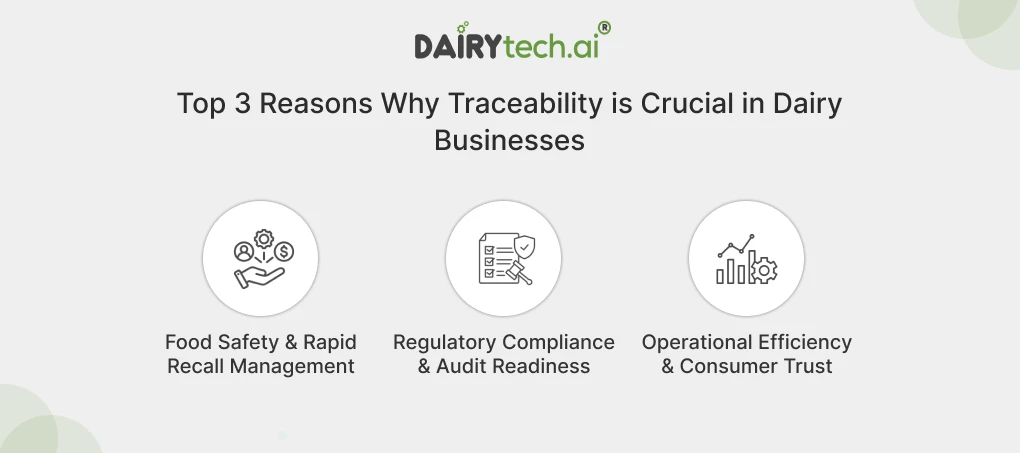
Food safety and rapid recall management
Dairy products are highly perishable and sensitive to contamination. Effective traceability allows businesses to identify affected batches, isolate the source of issues, and execute targeted recalls, minimizing health risks, financial losses, and brand damage.
Regulatory compliance and audit readiness
Dairy businesses must comply with strict food safety and quality regulations. End-to-end traceability ensures accurate recordkeeping, simplifies audits, and enables fast access to required documentation, reducing compliance risk and operational disruption.
Operational efficiency and consumer trust
Traceability increases visibility throughout the supply chain, ensuring better inventory control, reducing waste, and enabling data-driven decision-making. At the same time, transparent product tracking strengthens consumer confidence by demonstrating accountability and quality assurance.
Features of dairy ERP software that offer end-to-end supply chain traceability
A robust dairy ERP system empowers businesses to track products, ingredients, and processes seamlessly across every operational stage. The system captures and links traceability data from procurement to final product distribution. Here are the key features of dairy ERP software that support end-to-end traceability.
Farm-level milk procurement traceability
Farm-level milk procurement traceability ensures that raw milk can be tracked back to its exact source, the dairy farm. A dairy ERP system records farmer details, milk collection batches, quantities, collection time, routes, and transport information. It also captures quality parameters such as fat, SNF, temperature, and adulteration test results at the point of collection, linking them directly to each milk batch.
This data creates a reliable trail from the farm to processing, enabling quick identification of quality issues, accurate farmer payments, regulatory compliance, and strong end-to-end traceability across the dairy supply chain.
Batch, lot, & serial number management
Batch, lot, and serial number management is a core traceability feature in dairy ERP software, which enables precise tracking of raw materials, work-in-progress, and finished dairy products throughout the supply chain. Each production run or shipment is assigned a unique batch or lot number, while serial numbers can be used for item-level tracking when required.
This structured identification enables dairy businesses to link raw milk, ingredients, processing steps, quality checks, and packaging materials to specific finished products. In the event of a quality issue or recall, businesses can quickly trace affected products backward to their source or forward to distribution points. Effective batch, lot, and serial number management reduces the scope of recall, ensures regulatory compliance, and strengthens overall supply chain control.
Production and process traceability
Production and process traceability refers to the ability to track raw milk and ingredients as they transit through each stage of dairy processing, from intake and pasteurization to formulation, packaging, and end products. A dairy ERP system records detailed process data, including production orders, equipment used, processing parameters, yields, and timestamps at every step.
Linking raw materials, intermediate products, and finished batches creates a complete production history for each product. This enables dairy businesses to identify process deviations, trace quality issues to specific production stages, support regulatory compliance, and perform precise root-cause analysis, ensuring consistent quality and full supply chain traceability.
Quality and compliance tracking
Quality and compliance tracking in a dairy ERP system ensures that every stage of the supply chain meets food safety standards and regulatory requirements. The system captures data from lab tests, on-site inspections, and process checks, including fat and SNF content, microbial levels, temperature control, and packaging integrity.
The system can link these quality parameters to specific batches, lots, and production processes, enabling real-time monitoring, automating alerts for deviation, and taking corrective action. This ensures consistent product quality, simplifies autism support regulatory compliance, and provides a complete, auditable trail for traceability across the dairy supply chain.
Ingredient and packaging material traceability
Ingredient and packaging material traceability allows dairy businesses to track every component used in production, linking them to specific batches of finished products. A dairy ERP system records details such as supplier information, batch numbers, quantities, and quality test results for all raw materials and packaging items.
This ensures that any quality or safety issue can be traced back to the exact ingredient or packaging batch, enabling targeted recalls, reducing waste, and maintaining compliance with food safety regulations. It also provides full visibility into material usage, improving inventory management and supply chain accountability.
Cold chain and shelf life traceability
Cold chain and shelf life traceability ensure that perishable dairy products are stored, transported, and delivered under optimal conditions to maintain quality and safety. A diary ERP system monitors temperature, humidity, and storage conditions across warehouses, transport vehicles, and retail points, while tracking product expiration data and shelf life.
This visibility allows businesses to detect deviations, prevent spoilage, and take corrective actions promptly. Linking storage and transport data to specific batches supports compliance with food safety regulations, enabling timely recalls if needed and ensuring that consumers receive fresh, safe dairy products.
Distribution and customer-level traceability
Distribution and customer-level traceability allow dairy businesses to track finished products from warehouses to distributors, retailers, and end consumers. A dairy ERP system records shipment details, delivery routes, transport conditions, and customer information, linking each product batch to its final destination.
This enables rapid identification of affected products in the case of quality issues, ensures timely and targeted recalls, and maintains full visibility across the supply chain. It also supports customer accountability, enhances service reliability, and provides a complete audit trail for regulatory compliance, strengthening operational control and consumer trust.
Automated traceability reports and audit trails
Automated traceability and audit trails are key features of dairy ERP software that simplify regulatory compliance and operational oversight. The system generates real-time reports that connect batch ingredients, manufacturing processes, quality checks, and distribution data, providing a complete history of each product.
Audit trails automatically record all changes, approvals, and transactions, ensuring transparency and accountability across the supply chain. This enables dairy businesses to respond quickly to inspections, demonstrate compliance with food safety regulations, and perform precise root-cause analysis during recalls or quality investigations, reducing risk and improving overall traceability.
Benefits of end-to-end traceability in the dairy industry
End-to-end traceability in the dairy industry is a tool that enhances safety, quality, and operational performance. Track every stage of the supply chain, from raw milk collection to final delivery; dairy businesses can respond quickly to issues, maintain consistent product quality, optimize processes, and build customer trust. Here are the top 5 benefits of implementing end-to-end traceability in the dairy business.
Enhanced food safety
A dairy ERP system records detailed data at every step, including raw milk quality parameters, production processes, temperature-controlled storage, and transport conditions, supporting food safety. This ensures that any deviation or contamination can be detected immediately. In the case of a quality issue, traceability enables businesses to quickly identify affected batches, allowing swift corrections or targeted recalls. This protects consumers, reduces health risks, and prevents large-scale product loss.
Enhanced food safety through traceability not only meets regulatory requirements but also builds trust with consumers and strengthens a dairy brand’s reputation.
Regulatory compliance
Dairy businesses must adhere to strict food safety standards, quality regulations, and audit requirements. The system can capture and centralize all critical data across the supply chain, including raw milk sourcing, production processes, quality tests, storage conditions, and distribution records.
This creates a fully auditable digital trail that simplifies inspections, reporting, and certification processes. By maintaining accurate, real-time records, dairy businesses can demonstrate adherence to regulatory standards, reduce the risk of penalties or recalls, and ensure that their operations meet both local and international safety requirements.
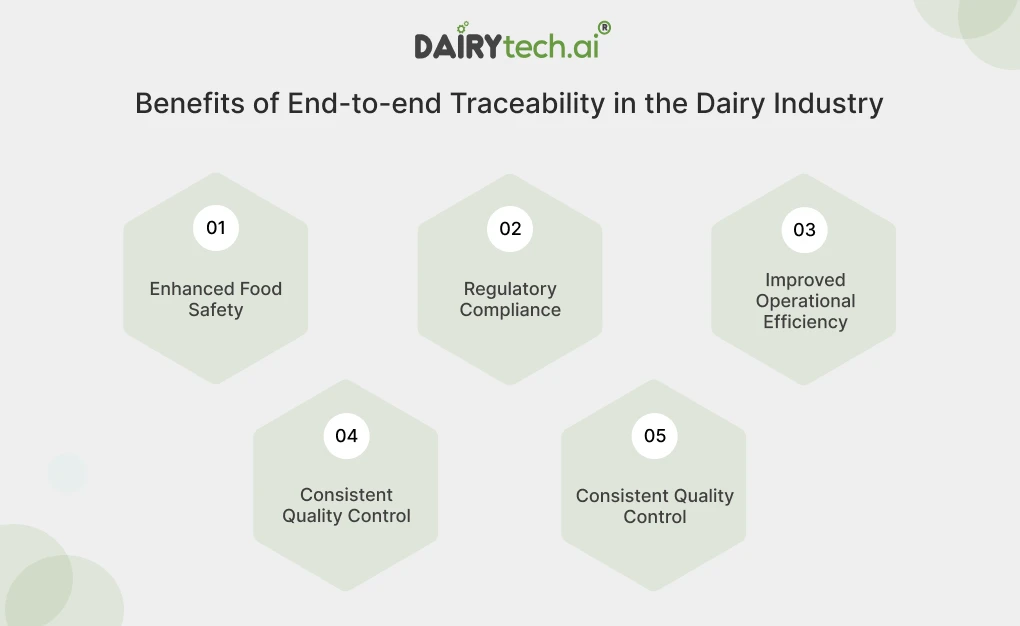
Improved operational efficiency
Providing real-time visibility and control across the entire supply chain, the dairy ERP system ensures end-to-end traceability, enhancing operational efficiency. The system consolidates data from milk procurement, production, inventory, quality checks, and distribution, enabling businesses to monitor workflows, identify bottlenecks, and optimize resource utilization.
With accurate batch tracking, inventory management, and process monitoring, dairy operations can reduce waste, prevent overproduction or stockouts, and streamline production planning. This efficiency lowers operational costs, accelerates decision-making, improves supply chain coordination, and ensures the timely delivery of high-quality products to customers.
Consistent quality control
The system enables tracking every stage of production, from raw milk collection and ingredient sourcing to processing, packaging, and storage. This ensures that quality standards are maintained throughout the supply chain.
The system records key quality parameters, monitors deviations in real-time, and links results to specific batches or lots. This enables early detection of issues, precise corrective actions, and prevention of contaminated or substandard products from reaching consumers. As a result, dairy businesses can consistently deliver safe, high-quality products while minimizing recalls, waste, and reputational risk.
Boost brand reputation
End-to-end traceability enables dairy businesses to build and maintain a strong brand reputation by offering transparency, accountability, and commitment to quality. When every product can be traced from farm to consumer, customers gain confidence that the dairy company prioritizes food safety, quality, and ethical sourcing.
A dairy ERP system enables accurate recordkeeping, quick response to quality issues, and reliable recall management, which protects consumers and reinforces trust. It facilitates businesses to deliver safe, high-quality products and offer operational transparency. This strengthens customer loyalty, differentiates the brand in a competitive market, and enhances overall credibility.
Conclusion
In perishable industries such as the dairy industry, end-to-end traceability has become crucial for ensuring food safety, regulatory compliance, operational efficiency, and consistent product quality. Implementing a robust dairy ERP system enables businesses to gain real-time visibility from farm-level milk procurement to distribution, track every batch and ingredient, monitor cold chain conditions, and respond quickly to quality issues or recalls.
DairyTech.ai supports dairy businesses in achieving complete supply chain traceability through its industry-specific ERP solutions. The system integrates milk procurement, production, quality management, inventory, cold chain monitoring, and distribution into a single platform, building a transparent, compliant, and resilient supply chain.
Connect with us today to discover how our dairy ERP solutions can help you gain full control, reduce risk, and future-proof your dairy business.